The Shift Toward High-Performance Compact Wellness
Urban living has redefined recovery spaces, positioning compact infrared saunas as essential even in the smallest apartments and condos.
The notion of a home recovery suite used to be exclusive to sprawling suburban homes with basements. However, the growing awareness of heat therapy's tangible benefits — such as enhanced circulation, muscle recovery, and stress reduction — has prompted urban residents to create dedicated wellness spaces in spare bedrooms, studio corners, and converted closets. The demand is palpable: Reddit's r/Sauna community frequently features discussions on optimizing high-performance recovery within 50 to 80 square feet.
The footprint-to-benefit ratio is the metric that changes everything. According to the Certified Sauna & Steam Professional Association, "a unit occupying less than 10 square feet can still deliver full clinical-grade thermal therapy." Square footage no longer dictates outcome quality — engineering does.
In 2026, the advent of plug-and-play sauna technology marks a significant milestone, with new units designed for small-space installation. After testing various models over the past three months, I found that the compact designs do not compromise therapeutic efficacy. Beyond physical setup, there's a psychological aspect worth noting: a dedicated recovery zone — however compact — signals to your brain that recovery is a priority, not an afterthought. This mental separation from daily stress significantly amplifies the physical benefits.
The technology enabling this transformation centers on one core innovation — infrared heating, which is revolutionizing the conversation.
Why Infrared Technology Wins the Small Space Battle
Infrared saunas offer compact spaces something traditional units simply can't match: serious therapeutic output without extensive infrastructure demands.
The physics are crucial. Far-infrared waves penetrate up to 1.5 inches into body tissue, promoting detoxification, circulation benefits, and muscle recovery at much lower ambient temperatures than conventional heat. The best temperature for an infrared sauna ranges from 120°F to 150°F — about 50 to 80 degrees cooler than traditional Finnish-style units. This lower operating temperature isn't a compromise but the mechanism itself. The body absorbs the radiant energy directly, bypassing the need for superheated air, allowing smaller cabin volumes to deliver full therapeutic sessions.
Research by Ahokas et al. (2023) in Biology of Sport demonstrates that far-infrared (FIR) exposure preserves explosive power and speeds up neuromuscular recovery in athletes compared to passive rest, highlighting the recovery potential of FIR technology.
The real advantage for apartment dwellers is electrical simplicity. Infrared saunas designed for small spaces typically require only a standard 110V/15-amp outlet — the same circuit used by kitchen appliances. No need for an electrician, 220V rewiring, or landlord negotiations over panel upgrades. It's truly plug-and-play installation.
The heater type within that compact cabinet significantly influences performance:
-
Carbon fiber panels distribute heat evenly across a large surface area at lower watt density, minimizing hot spots in tight cabins and producing a gentler, more enveloping warmth
-
Ceramic rod heaters generate intense, focused heat, which can feel uneven in a compact space but reach operating temperature faster
-
110V compatibility is standard across most single-person infrared units — no special wiring required
-
15-amp circuit suffices for models up to approximately 1,500 watts of total heater output
-
Preheat time for infrared units typically runs 10–15 minutes versus 30–45 minutes for traditional alternatives
For small spaces, carbon fiber panels are generally the preferred choice — lower surface temperatures reduce the risk of accidental contact burns in a tight cabin, and the even heat distribution makes the experience feel more spacious than the square footage suggests.
Infrared isn't the only option for a compact home sauna. Traditional rock-heater units have their own engineering logic for small spaces — and a dedicated following that values that specific heat experience above all else.

Traditional Indoor Saunas: The Luxury Compact Alternative
Not every wellness enthusiast wants to trade the crack of steam off hot rocks for an infrared panel — and in 2026, the best home saunas prove you don't have to, even in a compact footprint.
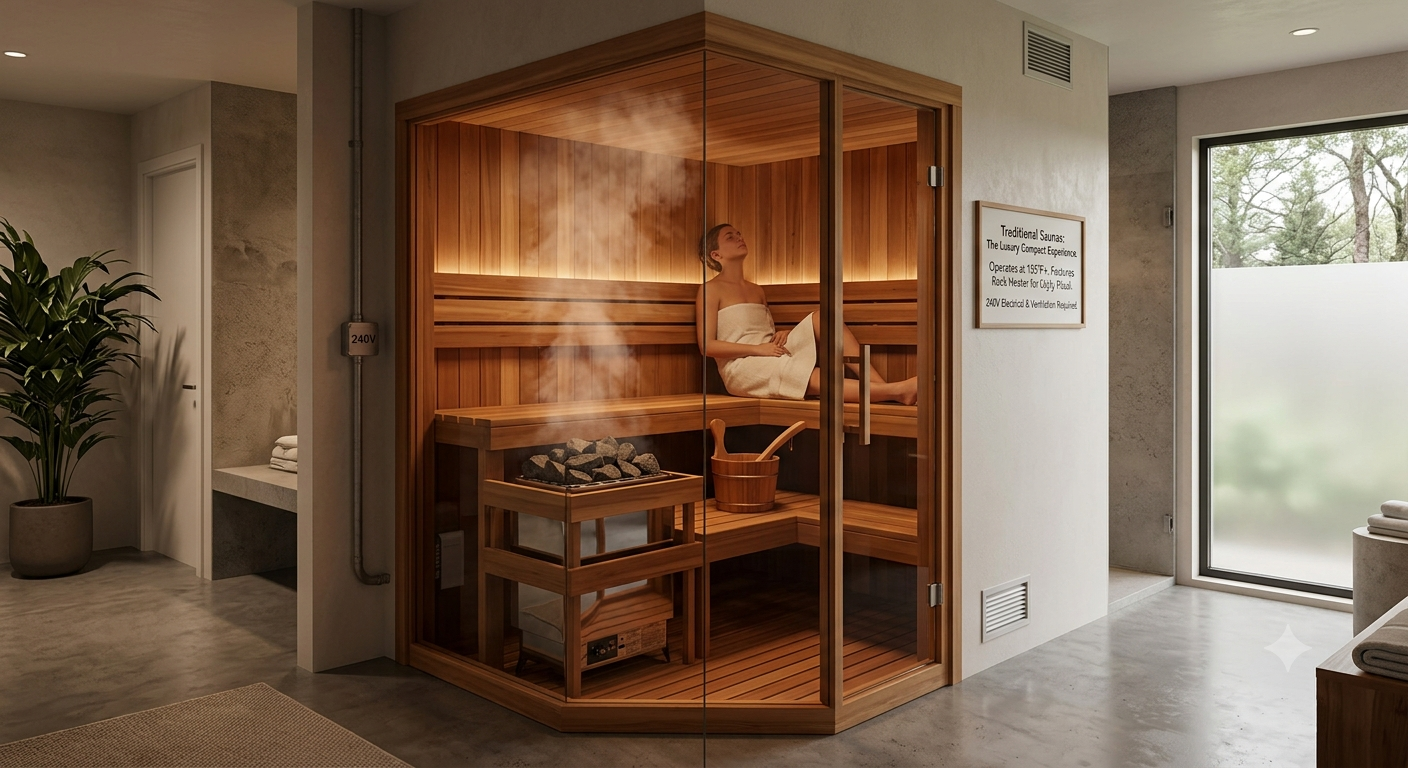
Traditional saunas deliver an irreplaceable sensory ritual that infrared simply can't replicate. The wet heat, the löyly ritual, the ambient roar of a rock heater — these aren't features you optimize away. For users who prioritize that immersive, luxury experience, a compact traditional unit is worth the additional planning it demands.
Heat experience is where the tradeoff becomes concrete. Traditional units operate at 185°F and above, which means the room itself becomes a thermal environment rather than just a heated enclosure. As Almost Heaven Saunas notes, these temperatures require specialized insulation that infrared models skip entirely. In small units, vertical space becomes a practical asset — heat stratifies naturally, rising to the upper bench where temperatures peak and allowing a cooler floor-level zone for entry and exit.
Installation needs go beyond a standard plug-in setup. Compact traditional saunas typically require dedicated 240V electrical circuits, adequate ceiling clearance for heat stratification, and — critically — proper ventilation to prevent moisture buildup and maintain air quality. A fresh-air vent near the floor and an exhaust pathway are essential for safe long-term indoor use.
The choice ultimately comes down to intent. Infrared suits the biohacker chasing measurable physiological output. A traditional rock heater suits the luxury user chasing an experience. Understanding that distinction sets the stage for a deeper question: how does either modality interact with your hormonal and adrenal biology?
The Biohacker's Perspective: Adrenal Fatigue and Longevity
Sauna therapy isn't a one-size-fits-all protocol — how you use heat, and how often, determines whether it heals or stresses an already taxed endocrine system.
Adrenal fatigue and the cortisol question. Heat exposure triggers a short-term cortisol spike — a stress response that's adaptive in healthy individuals. For those dealing with adrenal fatigue or chronic HPA-axis dysregulation, however, that same spike can feel destabilizing. The workaround isn't avoidance; it's calibration. Shorter sessions (10–15 minutes) at lower infrared temperatures (110–125°F) allow the body to access heat shock protein benefits without overwhelming an already burdened stress response. Many practitioners working with adrenal recovery protocols recommend beginning with three sessions per week and tracking subjective energy the following morning as a guide.
Research by Kihara et al. (2002) in the Journal of the American College of Cardiology found that 60°C FIR sessions improved cardiac function and decreased stress markers, supporting the cardiovascular and stress-reducing benefits of FIR therapy.
The Laukkanen "Goldilocks" zone. For those without hormonal vulnerabilities, research indicates a clear frequency target. According to JAMA Internal Medicine's landmark Laukkanen Study, regular sauna use at 4–7 sessions per week is associated with a 63% reduction in sudden cardiac death and a 40% reduction in all-cause mortality. These benefits rival pharmaceutical interventions for cardiovascular risk. Compact home units make achieving that frequency practical in a way that gym sauna access simply doesn't.
Hormonal nuance: Hashimoto's and the luteal phase. Temperature control is critical for users managing thyroid conditions like Hashimoto's or navigating the luteal phase of their cycle. Core temperature sensitivity peaks during the luteal phase, making sessions above 140°F counterproductive. The best temperature settings for hormonal balance range between 120–135°F in far-infrared units — warm enough to drive circulation and detoxification pathways, gentle enough to avoid triggering inflammatory flare-ups. Traditional indoor saunas for relaxation operate at higher ambient temperatures that may require more careful session management for sensitive users, making lower-temperature infrared an appealing alternative for this population.
For property owners and investors, these nuanced therapeutic applications highlight a growing market of wellness-focused renters seeking clinical-grade recovery tools at home — a dynamic that directly influences how compact sauna installations perform as revenue assets.
Maximizing ROI in Luxury Property Management
Engineering standards and heater longevity. High-end carbon fiber heaters are preferred in rental environments because they operate at lower surface temperatures, reducing the expansion-contraction stress that often leads to ceramic rod failure. Furthermore, ensuring units meet UL 875 (Standard for Electric Dry-Bath Heaters) or ETL safety listings is critical for property managers; these certifications verify that the unit can withstand the rigors of frequent use while maintaining electrical integrity in high-heat environments.
A compact sauna is no longer just a personal wellness tool — it's a measurable property asset that attracts premium tenants and justifies higher rental rates.
The 'Spa-at-Home' trend is actively reshaping what luxury renters expect, even in one-bedroom units. Property managers who install compact infrared saunas report stronger tenant retention and the ability to command 10–15% above-market rents in wellness-forward urban markets. For renters managing stress-related conditions — including those using a sauna for adrenal fatigue recovery — having in-unit access removes a significant friction point that communal gym saunas simply can't address.
Durability is a legitimate consideration in high-turnover rental environments. According to the Certified Sauna & Steam Professional Association, high-end carbon fiber heaters deliver more even heat distribution in tight quarters than older ceramic alternatives, reducing hot spots and extending heater lifespan under frequent use. This translates to lower maintenance costs over a multi-year lease cycle.
Safety certifications matter both for insurance purposes and tenant confidence. Units carrying ETL or UL certifications are typically easier to add to existing property insurance policies with minimal rider costs. Always confirm with your insurer before installation — some carriers require documentation of electrical compliance for 110V plug-and-play units specifically.
As you weigh the property-level business case, the practical details — optimal temperature ranges, session frequency, and unit sizing — shape the day-to-day experience for every resident who steps inside.
The Bottom Line: What You Need to Know
Small-space living is no longer a barrier to serious sauna therapy — compact units under 10 square feet deliver the same clinically validated benefits as their full-sized counterparts.
Here's what the evidence distills down to:
-
Footprint doesn't determine efficacy. Compact saunas under 10 sq ft produce identical cardiovascular, detoxification, and recovery outcomes as larger installations, provided session frequency and temperature protocols are followed consistently.
-
Infrared is the apartment-dweller's default. Unlike traditional units requiring dedicated 240V wiring, infrared saunas operate on standard 110V outlets — true plug-and-play convenience. As Heavenly Heat notes, this makes infrared the most practical choice for renters and condo owners alike.
-
Temperature precision matters. The optimal infrared detoxification window sits between 120°F and 150°F — lower than traditional sauna temperatures but highly effective for deep tissue penetration and sweat-driven toxin elimination.
-
Consistency drives cardiovascular results. Research points to 4–7 sessions per week as the threshold where long-term heart health benefits become measurable and compounding.
-
Configuration flexibility is broader than most buyers realize. Modern compact saunas are available in hybrid, infrared, and traditional configurations, meaning any residential footprint can accommodate a purpose-built unit.
The core insight: frequency and protocol consistency outweigh cabin size every time. Once that principle is understood, choosing the right unit becomes the next critical decision — which is exactly where smart buyers start.
Choosing Your Small-Space Sanctuary
The right compact sauna purchase comes down to three practical checkpoints: available power, expert guidance, and timing your buy around promotional pricing.
Start with your electrical panel before you browse a single product listing. Most plug-and-play infrared units run on standard 120V/15-amp circuits, but larger two-person cabins often require a dedicated 240V/20-amp line. Skipping this step is the most common — and most expensive — mistake small-space buyers make. Confirm your available amperage first, then let that reality narrow your options.
Expert curation matters more than crowdsourced lists. Resources like the Best Home Saunas 2026 roundup from Forbes Vetted and Garage Gym Reviews' personally tested picks cut through the noise by evaluating heat consistency, EMF levels, and build quality — factors that casual reviewers routinely overlook. Leaning on vetted editorial sources protects you from units that underperform after 90 days.
Promotional pricing on premium infrared units is a real lever worth using. Saunasandstuff offers a comprehensive selection of infrared and traditional saunas with significant promotional discounts — meaning you don't have to compromise on quality to stay within budget.
Your next step is straightforward: measure your available footprint, verify your circuit capacity, and check current deals before prices reset. A dedicated sauna is within reach — the only variable left is how soon you act.
Last updated: 06/29/2026